Mobile App Design
Discover professional mobile app design services by Milaknight Tech, from planning and UI/UX design to development, testing, and App Store publishing.
Every business that wants to stay competitive needs a strong digital presence, and nothing delivers that presence quite like a purpose-built mobile application. Mobile app design is no longer a luxury reserved for large corporations — it's a practical, high-return investment for businesses of every size. Whether you're a startup or an established brand, the right app puts your services directly in your customer's pocket.
At Melanaite Tech, a leading technology systems and products company, we've helped dozens of businesses turn rough ideas into polished, market-ready applications. Our approach to mobile app design combines technical precision with deep user experience thinking — because a beautiful app that nobody can navigate isn't really an asset. If you're ready to make a move, you're in the right place.
The Importance of Mobile App Design for Your Business
Here's the thing most business owners don't fully appreciate until it's almost too late: your competitors are already building apps. The gap between businesses that have mobile applications and those that don't is widening every single year. A well-executed app doesn't just add convenience — it fundamentally changes how customers perceive your brand and how often they engage with it.
Beyond perception, the data tells a compelling story. Mobile users spend the vast majority of their screen time inside apps rather than browsers. That means your website alone, no matter how polished, is missing a huge slice of potential engagement. Investing in professional mobile app design and programming positions your business exactly where modern consumers already are.
Increasing Free Reach for Your Business
Your app listing on the App Store and Google Play acts as a permanent, searchable storefront — discoverable 24/7 without ongoing ad spend
Push notifications give you a direct, zero-cost channel to reach customers who have already opted in
Word-of-mouth sharing of apps happens organically, especially when the user experience is smooth and genuinely useful
App Store Optimization (ASO) functions similarly to SEO, helping new users find your business through keyword searches inside app stores
Direct Customer Access at Any Time
Your app is always on — customers can browse, book, or buy at 2 a.m. without waiting for business hours
Personalized push notifications reach users in real time, delivering offers and updates the moment they matter most
Offline functionality in certain app types means customers can still interact with your content even without an internet connection
Unlike email or social media, app notifications appear directly on the lock screen — the most valuable real estate in digital marketing
Improving User Experience
A native app responds faster than any mobile website, reducing frustration and increasing session time
Intuitive navigation, tailored specifically to your audience, keeps users engaged and moving toward conversion
Consistent branding across every screen builds familiarity and trust that browser-based experiences rarely achieve
Accessibility features built into mobile platforms help you serve a wider audience without extra development overhead
Building Effective Communication with Customers
In-app messaging and live chat features let customers reach your support team without ever leaving the app
Automated responses and chatbots handle routine queries instantly, freeing your team for complex issues
Feedback forms and rating prompts embedded inside the app generate real, actionable customer insight
Transactional notifications — order confirmations, delivery updates — keep customers informed and reduce support ticket volume
Strengthening Your Business
An app signals market credibility; customers instinctively trust businesses with polished digital products
Integrated analytics give you granular data on user behavior, purchase patterns, and feature adoption
Loyalty programs, points systems, and exclusive in-app offers are far easier to manage inside an application than through any other channel
Your app becomes a scalable platform — add features, expand markets, or integrate third-party services as your business grows
Standing Out from Competitors
Most small and medium businesses in your sector still don't have a dedicated app — launching one immediately differentiates you
A distinctive UI design that reflects your brand identity creates a visual impression competitors can't easily replicate
Exclusive app-only deals give customers a tangible reason to download and stay loyal to your platform
Speed and reliability, hallmarks of a professionally built app, create a contrast that customers notice and remember
Increasing Conversion Rates
Streamlined checkout flows inside apps remove the friction that causes cart abandonment on mobile websites
One-tap payment integrations — Apple Pay, Google Pay, saved cards — dramatically reduce the steps between intent and purchase
Smart retargeting through push notifications re-engages users who browsed but didn't convert
Personalized product recommendations driven by in-app behavior increase average order value on every session
Building Brand Loyalty
Gamified loyalty programs — badges, streaks, reward points — create habitual engagement that keeps users returning
Personalized content feeds based on past behavior make every user feel like the app was designed specifically for them
Exclusive early access to products, events, or features rewards loyal app users and deepens emotional connection to your brand
Consistent positive experiences inside your app compound over time into genuine brand advocacy
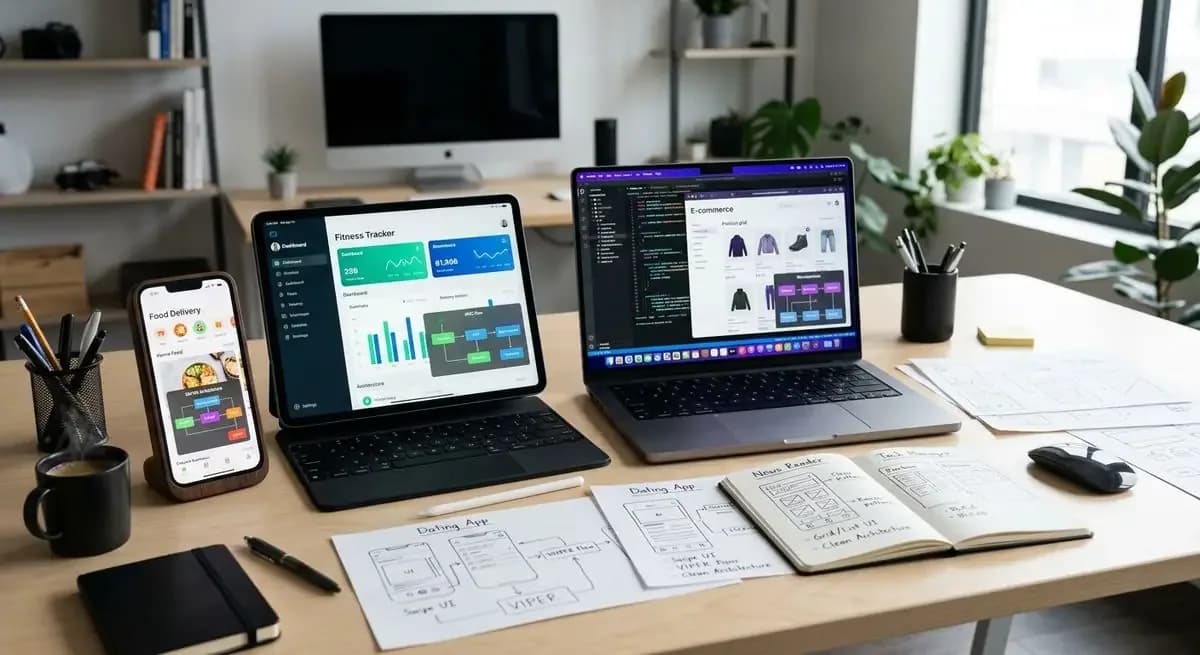
What Are the Types of Mobile Applications?
Not all apps are built the same way or serve the same purpose, and understanding the landscape before you start is genuinely important. What's interesting here is that many businesses come to mobile app design companies without a clear sense of which category they actually need — and that confusion can cost time and money. The right type of application depends on your audience, your service model, and your growth goals.
At Melanaite Tech, our technology systems and products company has experience across every major app category. Before a single line of code is written, we sit down with clients to understand their business model and map the right type of application to their specific objectives.
E-Commerce Applications
Product catalog management with real-time inventory sync
Secure multi-currency payment gateways built for global reach
Wish lists, product reviews, and personalized recommendations to drive sales
Order tracking and automated notification flows from purchase through delivery
Android and iPhone Applications
Native Android apps built in Kotlin or Java, fully optimized for Google's ecosystem
Native iOS apps built in Swift, designed to meet Apple's strict performance and design standards
Platform-specific UI patterns that feel natural to each operating system's users
Separate but parallel development tracks when distinct platform experiences are required
Cross-Platform Applications
A single codebase that runs seamlessly on both Android and iOS, reducing development time and cost
Frameworks like Flutter and React Native deliver near-native performance without the overhead of two separate builds
Ideal for businesses that need to launch quickly across multiple platforms with a consistent feature set
Easier long-term maintenance since updates are pushed to both platforms simultaneously
Corporate and Service Applications
Internal enterprise tools — HR portals, inventory management, field service apps — built for efficiency
B2B service platforms that connect vendors, partners, or clients inside a secure, branded environment
Role-based access control ensuring the right people see the right information
Integration with existing ERP, CRM, or database systems your organization already relies on
Booking and Delivery Applications
Real-time availability calendars and instant booking confirmation for service-based businesses
GPS-integrated delivery tracking that keeps customers informed at every stage
Driver or service-provider management dashboards built directly into the app ecosystem
Rating and review systems that create accountability and build trust between users and providers
Custom Applications Tailored to Your Business Activity
Fully bespoke solutions designed around a workflow, industry, or use case that no off-the-shelf product covers
Custom integrations with niche third-party APIs specific to your sector
Scalable architecture planned from day one so the app grows alongside your business without expensive rebuilds
Ongoing feature development roadmaps aligned with your business strategy, not just a one-time delivery
The Most Important Programming Languages Used in Mobile App Development in Saudi Arabia
Swift — Apple's native language for iOS development, known for speed, safety, and seamless integration with the Apple ecosystem. Most iOS apps in the Saudi market are built or rebuilt in Swift due to its performance advantages.
Kotlin — Google's preferred language for Android development. It replaced Java as the standard because of cleaner syntax, fewer bugs, and full backward compatibility with existing Android libraries.
Java — Still widely used in enterprise Android development across Saudi Arabia, particularly for legacy systems and large-scale corporate applications that require deep platform stability.
Flutter (Dart) — Google's cross-platform framework has seen explosive adoption. Dart, the underlying language, compiles to native ARM code, giving Flutter apps performance that rivals native builds at a fraction of the cost.
React Native (JavaScript) — Facebook's cross-platform framework leverages JavaScript, a language most web developers already know. It's popular among Saudi startups that need to ship fast across both platforms.
Python — Less common on the front-end of mobile apps, but heavily used for back-end APIs and AI-powered features that mobile applications consume.
Node.js — A runtime environment widely used to build the server-side infrastructure that powers real-time mobile app features like chat, live tracking, and notification systems.

What Are the Stages of Professional Mobile App Design?
Building a great app is a process, not an event. Most people overlook just how much structured thinking happens before a developer writes the first line of code. The quality of that pre-development work — the research, the strategy, the wireframes — is often what separates apps that thrive from apps that get deleted after one use.
Melanaite Tech follows a structured, collaborative process across every project. As a technology systems and products company committed to delivery excellence, we believe every client deserves full visibility into each stage of their project — no black boxes, no surprises.
Idea Analysis and Market Research
Discovery workshops with stakeholders to fully understand the business goal, target user, and success metrics
Competitor analysis to identify gaps, opportunities, and design patterns that are already resonating in your market
User persona development to ground every future decision in the needs of real people, not assumptions
Feasibility assessment covering technical complexity, timeline, and budget to set realistic expectations from day one
Defining Strategy and User Experience (UX)
Information architecture mapping — deciding what content and features live where inside the app
User journey mapping to trace every path a user might take from first open through core actions
Low-fidelity wireframes that sketch the structure and flow before any visual design begins
Usability testing of wireframes with real users to catch navigation issues before they become expensive problems
Designing a Professional Interface (UI)
High-fidelity mockups that bring your brand identity — colors, typography, iconography — into a fully realized visual system
Interactive prototypes that stakeholders can tap through and experience before development starts
Design system creation: a consistent library of reusable components that keeps the app visually coherent at scale
Accessibility review ensuring contrast ratios, text sizes, and touch targets meet international usability standards
Programming the Mobile App with the Latest Technologies
Front-end development translating approved designs into functional, responsive screens using the agreed technology stack
Back-end API development building the server logic, database structure, and third-party integrations the app depends on
Agile sprint cycles with regular builds delivered for client review — progress is visible every two weeks, not just at the end
Performance optimization baked into every development decision, not bolted on afterward
Testing and Quality Assurance
Functional testing across every screen and user flow to confirm the app behaves exactly as designed
Device and OS fragmentation testing across a wide matrix of phones and operating system versions
Security penetration testing to identify vulnerabilities before real users encounter them
Performance stress testing to confirm the app holds up under peak concurrent usage conditions
Launch on the App Store and Google Play
Full compliance review against both Apple App Store and Google Play Store guidelines before submission
App Store Optimization — keyword research, compelling descriptions, and screenshot design — to maximize organic downloads from launch day
Phased rollout strategy to catch any post-launch issues with a small percentage of users before full release
Post-launch monitoring dashboards tracking crash rates, session lengths, and user behavior in real time