Professional Mobile App Development
Learn how to build a professional mobile app, explore app types, development costs, monetization models, and mobile app development services by Milaknight Tech.
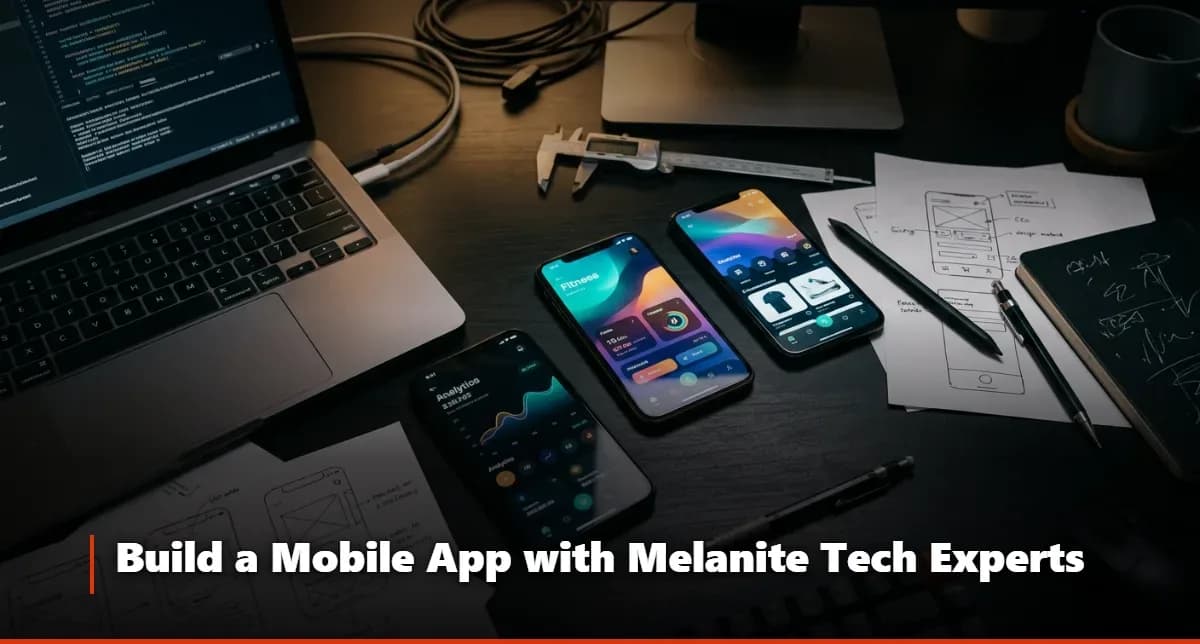
Deciding to build a mobile app is one of the smartest moves a business can make right now — but only if it's done properly. A poorly executed app can damage your brand faster than having no app at all. The good news is that with the right team behind you, the process is far more straightforward than most people assume.
Melanite Tech is a technology systems and products company with deep expertise in mobile application development. Whether you're launching a startup product or scaling an enterprise solution, the team at Melanite Tech brings the technical firepower and strategic thinking your project deserves. That combination is rare, and it matters enormously when you're making this kind of investment.
The Importance of Mobile App Design
A well-designed app creates an immediate first impression that either earns user trust or loses it within seconds
Intuitive navigation reduces user frustration and directly increases session length and retention rates
Consistent visual design across screens reinforces brand identity and makes the experience feel polished
Responsive layouts ensure the app performs beautifully across dozens of different screen sizes and resolutions
Accessibility-conscious design opens your app to a broader audience, including users with visual or motor impairments
Great design reduces the need for user support, because people can figure things out without asking for help
Apps designed with the user journey in mind convert browsers into loyal, paying customers far more effectively
Most people overlook just how much design influences business outcomes. It's not decoration — it's strategy built into every pixel.

Types of Mobile Apps
Native apps — built specifically for iOS or Android, offering the best performance and access to device hardware
Cross-platform apps — developed once and deployed on multiple platforms, balancing cost with broad reach
Progressive Web Apps (PWAs) — web-based experiences that behave like apps without requiring a store download
Hybrid apps — a blend of web and native technologies, useful for projects with tighter budgets and timelines
Enterprise apps — built for internal business use, handling things like logistics, HR, or field operations
E-commerce apps — dedicated shopping experiences with payment integration, product catalogs, and order tracking
On-demand apps — platforms that connect service providers with customers in real time, like delivery or booking tools
Understanding which type fits your goals is the first real decision in the app creation process, and it shapes every technical choice that follows.
7 Steps to Build a Mobile App
Define your goals and target audience — Be specific about what problem the app solves and who it serves. Vague goals produce vague apps.
Conduct market and competitor research — Study what's already out there, identify gaps, and find your differentiator before writing a single line of code.
Plan features and create a roadmap — List must-have features for launch versus nice-to-haves for later versions. Scope creep kills timelines and budgets.
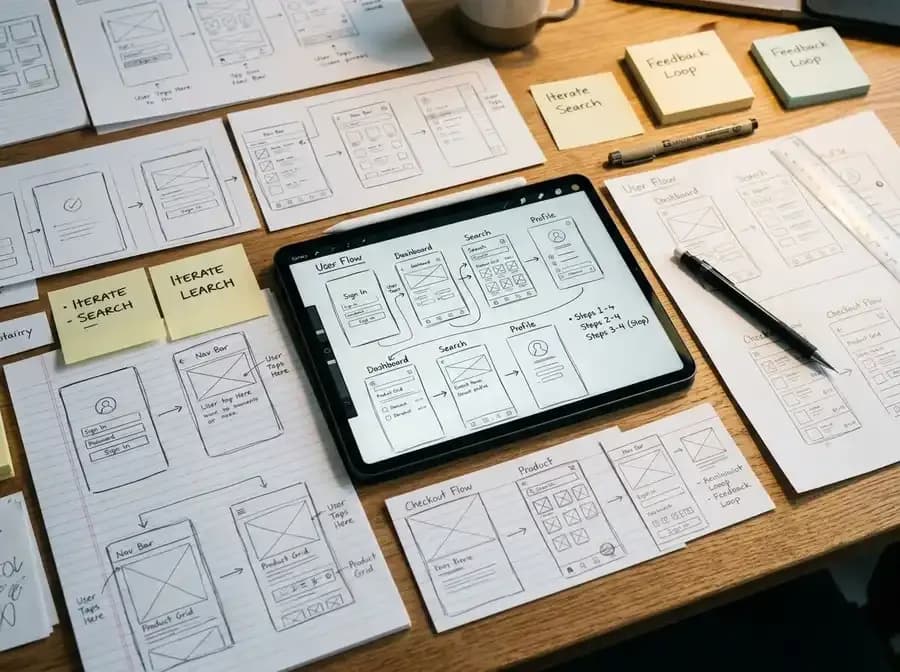
Design wireframes and prototypes — Sketch out the user flow visually before any app programming begins. This is where you catch problems cheaply.
Develop the app — Front-end and back-end development happens here. This is the longest phase and requires skilled engineers who communicate clearly.
Test rigorously across devices — QA testing catches bugs, performance issues, and edge cases before real users encounter them.
Launch and iterate — Publishing to the App Store or Google Play is not the finish line. Monitor analytics, collect feedback, and keep improving.
Skipping any of these steps doesn't save time — it borrows time from the future at a very high interest rate.
Ways to Monetize a Mobile App
In-app purchases — sell virtual goods, features, or content directly inside the app experience
Subscription models — charge a recurring fee for ongoing access to premium functionality
Freemium tiers — offer a free base version and charge for advanced capabilities
In-app advertising — display ads from ad networks, generating revenue based on impressions or clicks
Paid downloads — charge users upfront before they can install the app
Affiliate partnerships — earn commissions by promoting relevant third-party products or services within your app
Sponsored content — partner with brands to feature their products to your user base in exchange for fees
Here's the thing — the right monetization strategy depends entirely on your audience and their willingness to pay at different stages. Choose poorly and you'll frustrate users before they ever see your value.
Key Tips for Designing a Professional Mobile App
Prioritize speed above everything — Users abandon apps that take more than three seconds to load a screen. Performance is a feature.
Keep the onboarding process brutally short — Ask for only the information you absolutely need upfront. You can collect more later once trust is built.
Design for thumbs, not cursors — The most important interactive elements should fall within easy thumb reach on a standard phone grip.
Use real data in prototypes — Testing with placeholder text and fake images hides problems that only appear with actual content.
Build a feedback loop into the app — Make it easy for users to report issues or suggest improvements directly from within the experience.
Secure the app from day one — Encryption, secure authentication, and data privacy compliance are not optional — they're foundational.
Plan for offline functionality — Not every user has a reliable connection. Apps that degrade gracefully offline earn far more loyalty.
Criteria for Choosing the Best App Development Company
Proven portfolio — look for real case studies with measurable results, not just screenshots of pretty interfaces
Technical range — the company should handle both app programming and design under one roof rather than outsourcing critical work
Clear communication — you should always know what's happening, why a decision was made, and what's coming next
Post-launch support — app development doesn't end at launch; ongoing maintenance and updates are essential
Transparent pricing — avoid companies that can't give you a clear cost breakdown before work begins
Understanding of your industry — a company that already grasps your sector's nuances will ask smarter questions and build better solutions
Agile methodology — iterative development cycles reduce risk and let you course-correct before the project is fully committed
The Best Company to Build Your Mobile App
When you're searching for a partner to build a mobile app, you're not just hiring developers — you're choosing collaborators who will shape the digital face of your business. That decision deserves serious thought. Many agencies can write code. Far fewer can combine technical excellence with genuine product thinking.
Melanite Tech, a technology systems and products company, stands apart because the team approaches every project as if it were their own product. They don't just execute briefs — they challenge assumptions, suggest improvements, and flag potential problems before they become expensive mistakes. That kind of proactive involvement is what separates a vendor from a true development partner.
The company's track record spans multiple industries and app categories, from consumer-facing platforms to complex enterprise tools. Their process is structured enough to stay on schedule and flexible enough to adapt when priorities shift. If you want an app that performs, scales, and actually serves your users — this is where that conversation starts.
Advantages of Melanite Tech for Mobile App Development
End-to-end service — from initial concept through design, app programming, testing, and post-launch support, everything happens under one roof
Cross-platform expertise — native iOS, native Android, and cross-platform development are all within the team's core skill set
User-centered design approach — every interface decision is driven by how real users think and behave, not by what looks impressive in a demo
Transparent project management — clients receive regular updates, milestone tracking, and direct access to the team throughout the project
Scalable architecture — apps are built to handle growth from day one, so you're not rebuilding from scratch when user numbers climb
Security-first development — data protection, secure APIs, and compliance considerations are embedded into the development process from the start
Competitive, honest pricing — no hidden fees, no surprise invoices, and no promises that evaporate after the contract is signed
How Much Does It Cost to Build a Mobile App?
The cost of building a mobile app varies significantly based on complexity, platform, design requirements, and the experience level of the team you hire. A simple informational app with basic features might start at a few thousand dollars, while a feature-rich platform with custom back-end infrastructure, third-party integrations, and advanced security can run into six figures. The honest answer is that cost follows scope — and scope has to be defined before any serious number can be quoted.
What's interesting here is that many businesses focus too narrowly on the upfront development cost and underestimate ongoing expenses. Hosting, maintenance, updates to stay compatible with new operating system versions, and customer support infrastructure all carry real costs. A well-structured budget accounts for the full lifecycle of the app, not just the build phase.
Melanite Tech, as a technology systems and products company, provides detailed cost breakdowns before any work begins. There's no guesswork, no vague estimates, and no unpleasant surprises halfway through a project. If you want a realistic picture of what your specific app will cost — and what you'll get for every dollar — reach out to the Melanite Tech team directly.
FAQ
Questions on this topic
How long does it take to build a mobile app?
Timelines vary widely depending on the complexity of the app and the clarity of requirements going into the project. A straightforward app with a limited feature set might take eight to twelve weeks from kick-off to launch. A more complex platform with custom integrations, multiple user roles, and advanced features can take six months or longer. The single biggest factor that extends timelines is unclear requirements — the more precisely you define what you need before development starts, the faster and smoother the process becomes.
What platforms does Melanite Tech develop apps for?
Melanite Tech develops for both iOS and Android, either as separate native builds or through cross-platform frameworks that serve both ecosystems from a shared codebase. The right approach depends on your audience, your budget, and your performance requirements. The team will walk you through the trade-offs honestly so you can make a decision that fits your actual situation rather than a generic recommendation.
How much does mobile app development cost?
When you decide to build a mobile app, the cost is shaped by factors like the number of screens, the complexity of the back end, whether you need third-party integrations, and the level of design polish required. Melanite Tech provides transparent, itemized quotes based on your specific scope. Rather than working from industry averages, the team assesses your actual requirements and gives you a number you can plan around with confidence.