Enterprise Resource Planning Systems
Businesses that are serious about scaling can't afford to run on disconnected spreadsheets and siloed software. Enterprise resource planning systems bring every department — finance, HR, supply chain, operations into a single, unified platform where data flows freely and decisions are grounded in real information.
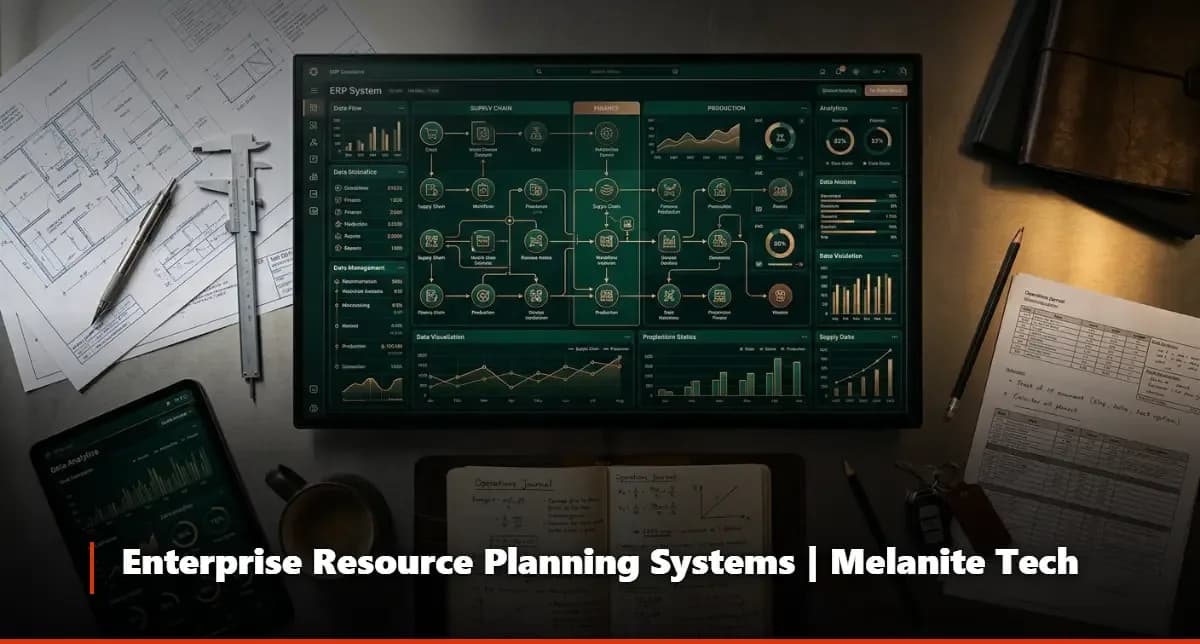
Businesses that are serious about scaling can't afford to run on disconnected spreadsheets and siloed software. Enterprise resource planning systems bring every department — finance, HR, supply chain, operations into a single, unified platform where data flows freely and decisions are grounded in real information. That's not a small thing. That's the difference between a company that reacts and one that leads.
What's interesting here is that most companies don't realize how much time and money they lose to manual data entry and communication gaps until they see what a well-implemented system actually looks like. Melanite Tech, a dedicated technology systems and products company, has spent years helping organizations across industries bridge exactly that gap — with purpose-built solutions that actually fit how modern businesses operate.
Definition of Enterprise Resource Planning (ERP)
At its core, enterprise resource planning is a category of business management software that integrates core business processes into one cohesive system. The idea isn't new — it grew out of manufacturing resource planning practices in the 1970s and 1980s — but the technology behind it has evolved dramatically. Today, an ERP platform connects everything from accounting and procurement to project management and customer data under one digital roof.
Think about what that actually means in practice. When a sales order is placed, the inventory system updates automatically, the finance team sees the impact on cash flow in real time, and the warehouse knows what to prepare for shipping. No emails bouncing between departments. No data entered twice. The business just works — smoothly, transparently, and with far less friction than most teams are used to.
What Is an Enterprise Resource Planning (ERP) System?
Enterprise resource planning systems are not simply software packages you install and forget. They are living frameworks that model your organization's workflows and enforce consistency across every touchpoint. A properly deployed ERP becomes the operational backbone of a company — the single source of truth that every team relies on to make decisions, measure performance, and plan for the future.
Here's the thing most vendors won't tell you upfront: the software itself is only half the equation. The real value comes from how well the system is configured to match your actual processes, and that requires a partner who understands both technology and business deeply. That's precisely where Melanite Tech distinguishes itself as a technology systems and products company — by approaching each implementation as a strategic business engagement, not just a technical rollout.
Read about: CRM system
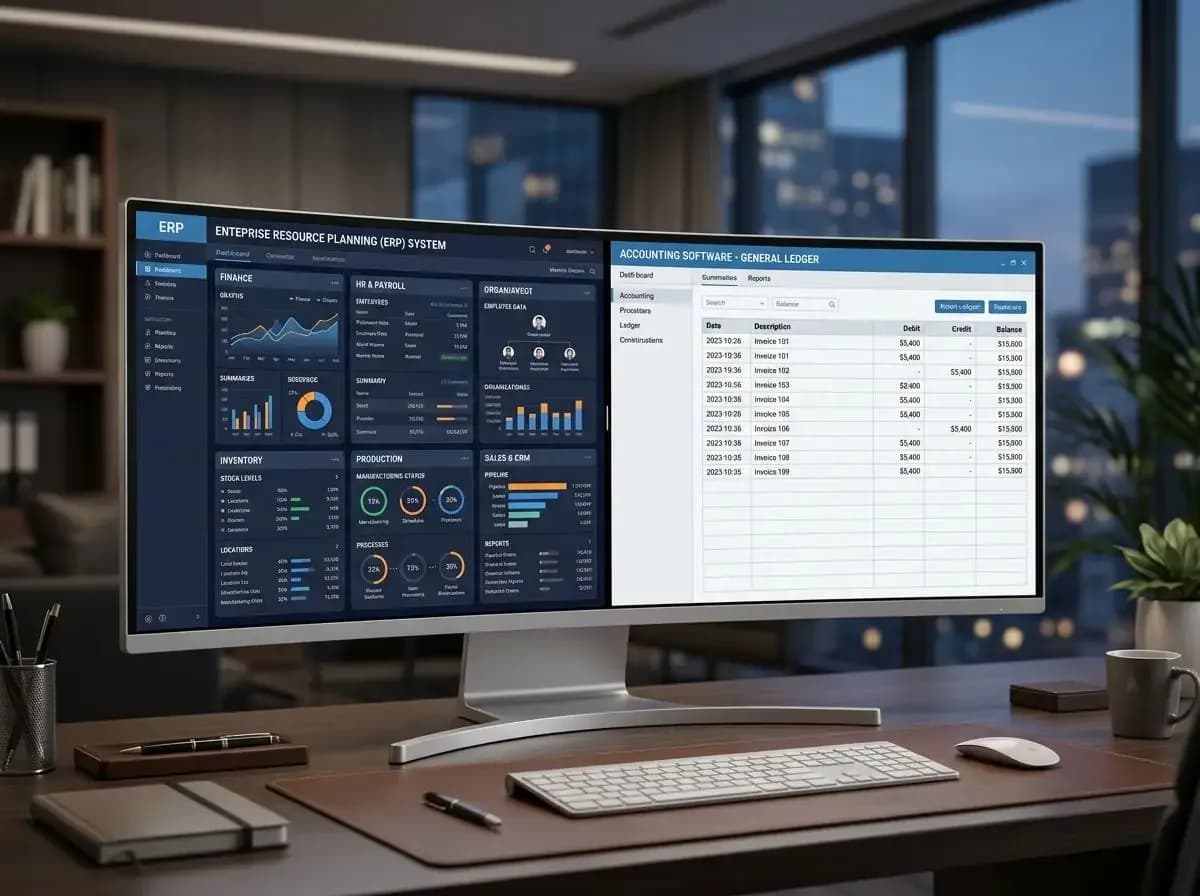
What Is the Difference Between an ERP System and Financial Systems?
A traditional financial system manages accounting records, general ledger entries, accounts payable, and accounts receivable — it is fundamentally a bookkeeping tool with reporting capabilities.
Enterprise resource planning systems go far beyond finance: they connect procurement, inventory, manufacturing, human resources, customer relationship management, and supply chain logistics into one integrated environment.
Financial software tells you what happened with your money; an ERP tells you why it happened, what drove it, and what's likely to happen next.
Data in a standalone financial system is often manually imported from other departments, creating lag time and room for error; in an ERP, that data flows automatically from the source.
Compliance and audit trails are stronger in ERP environments because every transaction is linked to a business event, not just a journal entry.
Scalability is another critical distinction — financial software tends to hit walls as transaction volumes grow, while enterprise resource planning systems are architected to scale with the business.
Fundamentals of Enterprise Resource Planning
Centralized database: All modules share a single database, which eliminates data duplication and ensures every department is working from the same information at the same time.
Modular architecture: Businesses can implement only the modules they need — finance, HR, procurement, production — and add more as the organization grows.
Real-time reporting: Dashboards and reports pull live data, so management always has an accurate picture of performance without waiting for end-of-month reconciliations.
Process standardization: ERP systems encode best-practice workflows, which reduces the reliance on individual knowledge and makes the business more resilient.
Role-based access control: Sensitive data is protected by permissions structures, ensuring employees only see what is relevant to their function.
Integration capabilities: Modern ERP platforms connect with third-party tools — CRMs, e-commerce platforms, payment gateways — through APIs, extending their reach without breaking the unified data model.
Automation of routine tasks: Purchase order approvals, invoice matching, payroll calculations, and dozens of other repetitive processes are handled automatically, freeing staff for higher-value work.
The Business Value of Enterprise Resource Planning (ERP) Systems
The return on investment from enterprise resource planning systems is real, but it rarely shows up in one dramatic moment. It accumulates quietly — in hours saved on reporting, in inventory costs reduced by better forecasting, in customer satisfaction improved by faster order fulfillment. Over time, those gains compound into a genuine competitive advantage that is very difficult for competitors without an ERP to replicate.
Most people overlook the cultural shift that comes with ERP adoption. When every team operates from shared data, the turf wars that plague siloed organizations start to dissolve. Finance stops blaming sales for inaccurate forecasts. Operations stops being blindsided by demand spikes. Leadership gets a clearer view of the business than they have ever had before. That kind of organizational clarity is worth far more than any single feature in the software catalog.
Melanite Tech's approach as a technology systems and products company emphasizes long-term value over short-term wins. The goal isn't just a successful go-live — it's a system that continues to deliver measurable business outcomes a year, three years, and five years after implementation.
How Do ERP Systems Work?
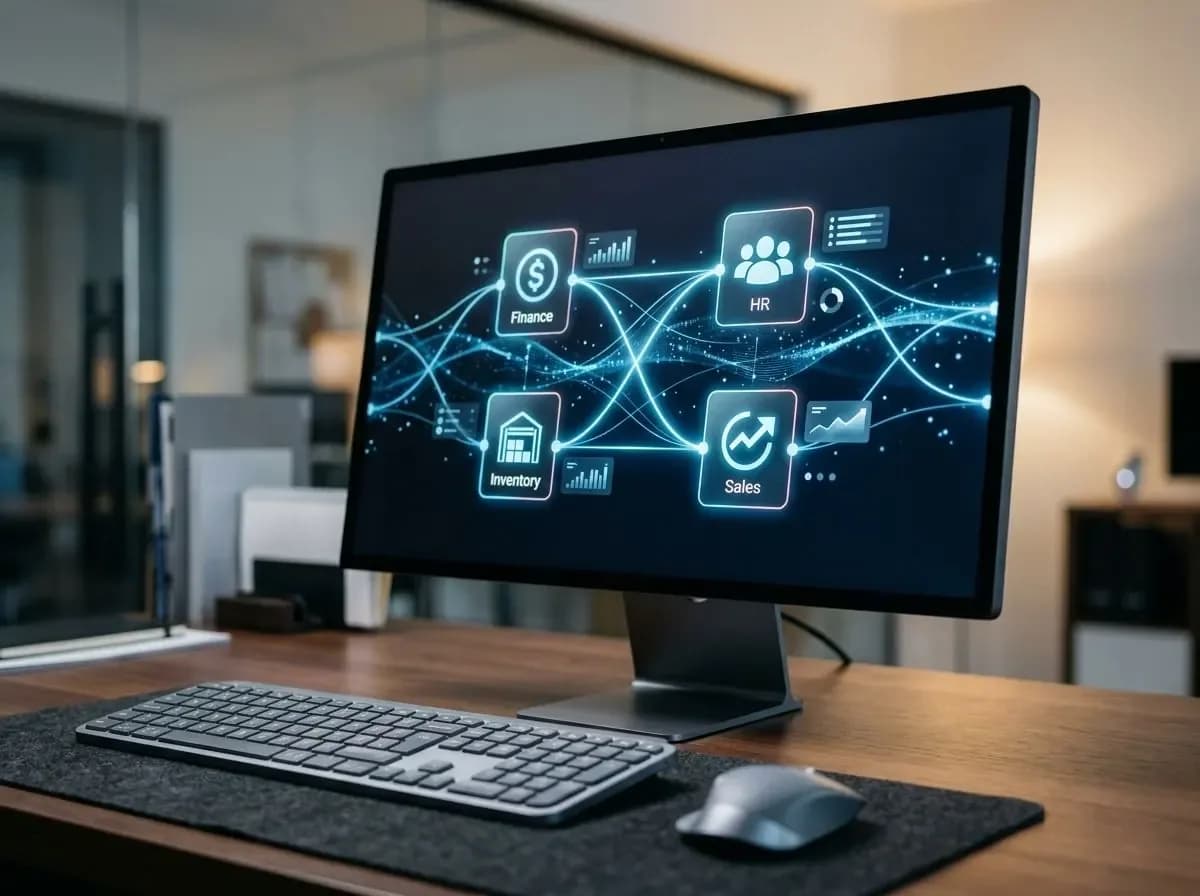
All business data — from sales orders to employee timesheets — is captured in a single centralized database the moment a transaction occurs.
Each department interacts with the system through a module tailored to their function, but every action they take is visible to authorized users across the organization.
Workflow engines route tasks automatically: an expense report submitted by an employee triggers a notification to their manager, then to finance, following a pre-defined approval path.
Reporting engines aggregate data from all modules, allowing managers to generate cross-functional reports without manual data collection.
Integration layers connect the ERP with external systems such as bank feeds, supplier portals, and logistics platforms, keeping information synchronized without manual intervention.
Built-in analytics and dashboards surface key performance indicators in real time, giving leadership the visibility they need to act on emerging trends before they become problems.
ERP Deployment Types
On-premise ERP: The software is installed on the company's own servers and managed by an internal IT team. This gives maximum control over data and customization but requires significant upfront capital investment and ongoing maintenance resources.
Cloud ERP (SaaS): The system is hosted and maintained by the vendor on remote servers and accessed via a web browser. Lower upfront cost, automatic updates, and high accessibility make this the dominant choice for growing businesses today.
Hybrid ERP: Core modules run on private cloud or on-premise infrastructure while other functions — often customer-facing or regional — are hosted in a public cloud. This model suits enterprises with complex regulatory or latency requirements.
Benefits of Enterprise Resource Planning Systems
Dramatically reduced manual data entry and the errors that come with it
Faster month-end and year-end close cycles because financial data is always current
Better inventory management through real-time stock visibility and automated reorder triggers
Improved regulatory compliance with built-in audit trails and financial controls
Higher employee productivity as routine tasks are automated and workflows are streamlined
Stronger customer service driven by accurate order tracking and faster response times
Scalability that supports business growth without a proportional increase in administrative overhead
Unified reporting that gives executives a complete, accurate view of business performance across every department
How Do I Know If I Am Ready for an ERP System?
The most honest answer is this: if you are regularly struggling to get accurate numbers out of your business, you are already paying the price of not having one. The question isn't really whether you need enterprise resource planning — it's whether the pain of the current situation outweighs the effort of making a change.
Some signals are obvious. Multiple teams maintaining separate spreadsheets. Finance and operations telling leadership conflicting stories about the same period. Customer complaints about order errors or delayed shipments that trace back to communication breakdowns. These are symptoms of a data infrastructure problem, and no amount of process improvement will fix them without better systems underneath.
Have you ever tried to produce a consolidated business report quickly and found it took days of frantic emails and manual reconciliation? If that sounds familiar, the readiness conversation is well overdue. Melanite Tech offers structured readiness assessments that help leadership teams understand exactly where they stand and what a realistic implementation path looks like for their specific organization.
Enterprise resource planning systems are not a luxury reserved for large corporations. Any business that has outgrown disconnected tools and manual workarounds stands to gain enormously from a well-implemented ERP — in efficiency, visibility, and sustainable growth. If you're ready to stop making decisions based on incomplete information and start running a truly connected operation, Melanite Tech is the technology systems and products company equipped to make that happen. Reach out today to start the conversation.
FAQ
Questions on this topic
What makes enterprise resource planning systems different from basic accounting software?
Enterprise resource planning systems manage the entire organization — procurement, HR, operations, supply chain, and finance — within one integrated platform. Basic accounting software handles only financial transactions and reporting. The difference is scope: accounting software tells you the financial story after events have happened, while enterprise resource planning systems connect the operational activities that drive those financial outcomes, giving businesses both visibility and control across every function.
How long does an ERP implementation typically take?
Timelines vary significantly based on company size, the number of modules being deployed, and the complexity of existing data and processes. A focused implementation for a mid-sized business might be completed in three to six months. Larger enterprise rollouts with heavy customization or multi-site deployments often run twelve to eighteen months. Working with an experienced partner like Melanite Tech, a technology systems and products company, compresses timelines considerably by avoiding the costly missteps that derail poorly managed projects.
Why should a business choose Melanite Tech for ERP solutions?
Melanite Tech brings a rare combination of technical depth and genuine business understanding to every engagement. As a technology systems and products company, the team doesn't just configure software — they map client workflows, identify inefficiencies, and design solutions that reflect how the business actually operates. Post-go-live support is taken seriously, which means clients aren't left alone to figure things out once the implementation team leaves.