Using Artificial Intelligence
The phrase using artificial intelligence gets thrown around so casually these days that its actual weight tends to get lost. This isn't just about chatbots or voice assistants — it's a fundamental shift in how industries operate, how decisions get made, and how humans and machines divide labor.
The phrase using artificial intelligence gets thrown around so casually these days that its actual weight tends to get lost. This isn't just about chatbots or voice assistants — it's a fundamental shift in how industries operate, how decisions get made, and how humans and machines divide labor. Understanding what this shift looks like in practice is more valuable than any buzzword summary.
At Milaknight Tech, a technology systems and products company, the focus has always been on making complex technology genuinely useful for real organizations. Their approach to artificial intelligence and its applications reflects a grounded, practical philosophy — not hype, but honest capability. That perspective runs throughout this guide.
Fields of Artificial Intelligence Application
Artificial intelligence doesn't live in one industry. It has spread across virtually every sector of modern life, reshaping processes that once depended entirely on human judgment and manual effort. What's interesting here is how differently it shows up depending on the domain — the same core technology producing radically different outcomes based on context.
The breadth of artificial intelligence in business is particularly striking. Whether you're looking at a hospital system predicting patient risk, a logistics company optimizing delivery routes, or a streaming platform deciding what to recommend next, the underlying engine is similar — large datasets, pattern recognition, and predictive modeling. The application layer is where the real creativity lives.
Healthcare
AI-powered diagnostic tools that detect diseases in medical imaging faster and with greater consistency than traditional methods
Predictive analytics that flag high-risk patients before a crisis occurs
Drug discovery platforms that reduce the timeline from years to months by simulating molecular interactions
Personalized treatment recommendations based on a patient's unique genetic and health profile
Administrative automation that handles scheduling, billing, and documentation so clinicians can focus on care
Industry
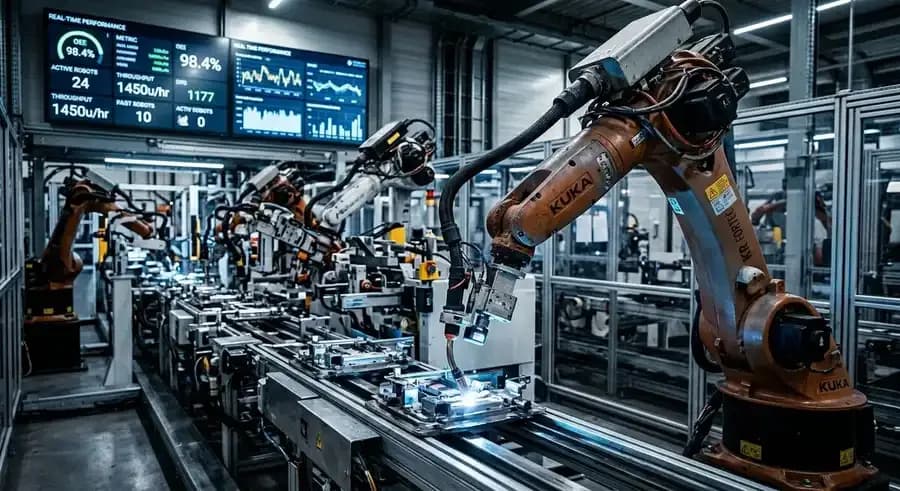
Predictive maintenance systems that detect equipment failure before it happens, reducing costly downtime
Computer vision tools that inspect products on assembly lines at speeds no human team could match
AI-driven supply chain optimization that adapts in real time to disruptions or demand shifts
Robotic process automation in manufacturing workflows, improving precision and throughput
Transportation
Autonomous vehicle systems that process sensor data to navigate safely without human input
Traffic management platforms that reduce congestion in real time by analyzing flow patterns
AI-based route optimization for freight and delivery networks
Predictive maintenance for fleets, flagging mechanical issues before they become safety risks
E-Commerce
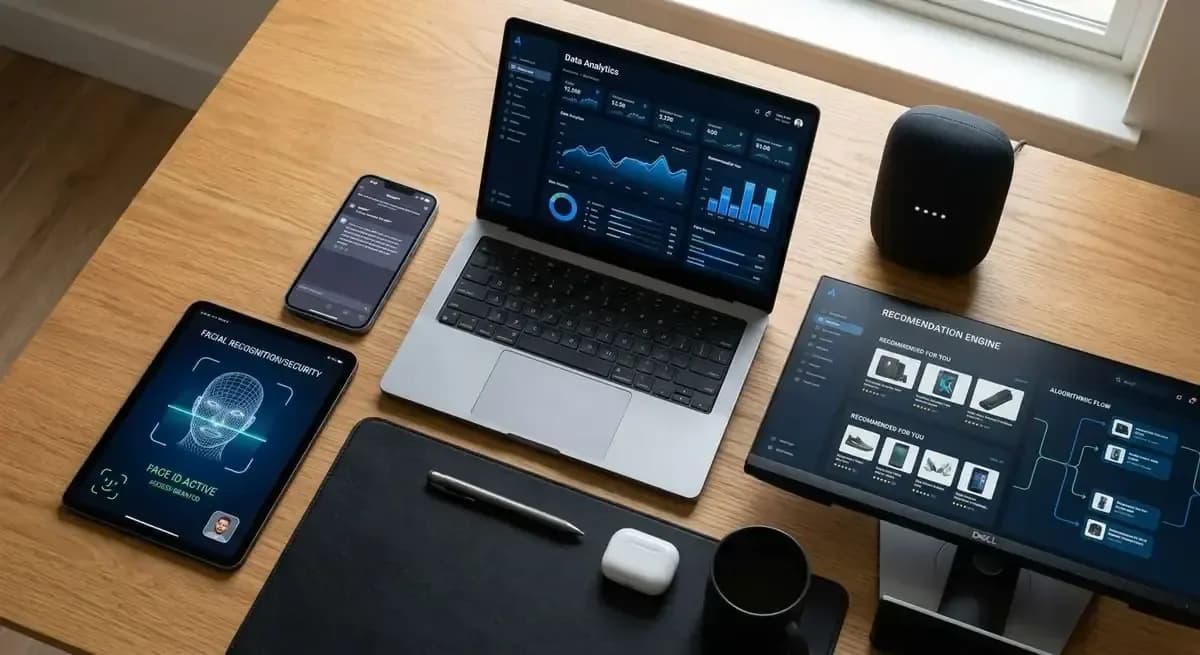
Personalized product recommendation engines driven by behavioral data
Dynamic pricing algorithms that adjust based on demand, inventory, and competitor activity
AI chatbots handling customer service queries around the clock without human agents
Fraud detection systems that identify suspicious transactions in milliseconds
Finance
Algorithmic trading systems that execute strategies at speeds no human trader can replicate
Credit scoring models that assess risk with more nuance than traditional methods
Anti-money laundering tools that scan millions of transactions for suspicious patterns
Robo-advisors offering portfolio management at a fraction of traditional advisory costs
Education
Adaptive learning platforms that adjust difficulty and pacing based on individual student performance
Automated grading tools for objective assessments, freeing teachers for deeper feedback
AI tutors that provide on-demand explanations and practice in any subject
Early intervention systems that identify students at risk of falling behind before they do
Entertainment
Content recommendation algorithms that keep users engaged on streaming and gaming platforms
AI-generated music, artwork, and scripts used as creative starting points
Real-time translation and dubbing tools that make content accessible across languages
Deepfake and visual effects technology that cuts production costs in film and media
Benefits of Artificial Intelligence
Dramatic increases in operational efficiency — tasks that once took hours complete in seconds
Improved decision-making through data-driven insights rather than gut instinct alone
Consistent quality and accuracy that doesn't fluctuate with human fatigue or distraction
Scalability — AI systems handle growing workloads without proportional increases in cost
Cost reduction across departments, from customer service to compliance to logistics
Faster innovation cycles, since AI can prototype, test, and refine ideas at machine speed
Enhanced personalization in customer experiences, driving loyalty and revenue
Around-the-clock availability — AI doesn't need sleep, breaks, or holidays
Drawbacks of Artificial Intelligence
Bias embedded in training data can produce discriminatory outcomes that are difficult to detect and correct
High upfront implementation costs put advanced AI tools out of reach for many smaller organizations
Over-reliance on AI decision-making can erode human skill sets and critical thinking over time
Privacy concerns are serious — AI systems require vast data, raising questions about consent and surveillance
Job displacement is real in certain sectors, even if new roles emerge elsewhere
AI systems can fail in unexpected ways when they encounter data outside their training distribution
Regulatory uncertainty means organizations are often building on shifting legal ground
Explainability remains a problem — many AI models are black boxes that can't easily justify their outputs
Applications of Artificial Intelligence
Natural language processing tools that power everything from search engines to customer support bots
Computer vision systems used in security, retail analytics, and medical imaging
Recommendation engines deployed across e-commerce, media, and content platforms
Sentiment analysis tools that monitor brand perception across social media in real time
Generative AI platforms that create text, images, audio, and video from simple prompts
Predictive analytics dashboards used in sales forecasting, inventory planning, and risk assessment
Autonomous systems ranging from self-driving vehicles to warehouse robots
AI-powered cybersecurity tools that detect and respond to threats faster than human analysts
The Career Future in Artificial Intelligence
Here's the thing about careers in AI — most people frame the conversation entirely around job loss, when the more accurate picture is one of job transformation. Yes, certain repetitive roles will be automated. That's not speculation; it's already happening. But the demand for people who understand how to build, manage, audit, and apply AI systems is growing faster than educational pipelines can produce them.
Artificial intelligence and its applications have created entirely new job categories that didn't exist a decade ago. Machine learning engineers, AI ethicists, data annotators, prompt engineers, AI product managers — these roles require a combination of technical knowledge, domain expertise, and human judgment that no algorithm fully replaces. The professionals who will thrive are those who treat AI as a collaborator rather than a competitor.
Milaknight Tech, as a technology systems and products company, actively helps organizations identify where AI fits into their workforce strategy — not to cut headcount indiscriminately, but to redeploy human talent toward higher-value work. The companies that approach this thoughtfully are the ones building durable advantages, not just short-term efficiency gains.
Common Uses of Artificial Intelligence in Remote Work
AI-powered meeting transcription and summarization tools that capture decisions and action items automatically
Smart scheduling assistants that coordinate across time zones without the back-and-forth email chains
Automated project status updates generated from task management platforms using AI analysis
AI writing assistants that help distributed teams produce consistent, professional communication faster
Virtual collaboration tools with real-time translation, making global teams genuinely functional
AI-driven performance tracking that gives managers visibility into productivity without invasive monitoring
Intelligent document search that lets remote employees find information instantly across sprawling file systems
Cybersecurity tools that protect remote endpoints and flag anomalous access patterns in real time
Using artificial intelligence isn't a trend to monitor from a distance — it's an active transformation that's rewriting how work gets done, how industries compete, and how people build careers. The organizations that engage with it seriously, thoughtfully, and with clear goals are the ones that will define the next decade. If you're ready to move from curiosity to capability, Milaknight Tech is the technology systems and products company equipped to guide that journey reach out and start the conversation today.
FAQ
Questions on this topic
What are the most common sectors benefiting from using artificial intelligence?
Healthcare, finance, retail, and manufacturing lead adoption right now, but the honest answer is that no sector is untouched. Using artificial intelligence has moved from optional competitive advantage to something closer to a baseline expectation in most industries. The sectors moving fastest are those where large volumes of data already exist and where prediction or automation delivers clear, measurable value.
Does using artificial intelligence threaten jobs or create new ones?
Both, and the split depends heavily on the role and industry. Routine, rules-based tasks face real displacement pressure. At the same time, artificial intelligence in business is generating demand for new skills — data science, AI governance, prompt engineering, and human-AI collaboration roles are all growing. Most credible research suggests the net effect is transformation rather than elimination, though the transition isn't painless for everyone.
How can small businesses start using artificial intelligence effectively?
Start narrow, not broad. Pick one specific problem — customer inquiries, appointment scheduling, inventory forecasting — and apply an AI tool designed for that exact use case. Avoid the temptation to overhaul everything at once. Milaknight Tech, a technology systems and products company, works with organizations of all sizes to identify practical entry points that deliver quick wins without massive infrastructure investment. The goal is momentum, not perfection.